


Report from the BALANCE HR Summit Conference, Part 1
The challenges and opportunities facing air traffic management have never been more complex. Generational change in the workforce, the growing complexity of air traffic, and the rapid advancement of artificial intelligence shape the future of the profession simultaneously. Recruitment and training must also adapt to these evolving realities.
At the end of October, more than 50 HR leaders, educators and air traffic management professionals from around the world gathered at the Headquarters of HungaroControl for the BALANCE ANSP HR Summit organised by our company. The conference explored how air navigation service providers can maintain and strengthen their competitiveness in today’s rapidly changing labour market and technological environment.
The agenda covered the entire employee lifecycle, including recruitment and retention, the impact of automation and artificial intelligence on both air navigation and HR, the role of continuous learning and reskilling, understanding the expectations of younger generations, fostering an inclusive and diverse corporate culture, and the evolving strategic role of HR.
The Human Brain Remains Our Most Important Tool

One of the most discussed topics of the conference was the application of artificial intelligence. Interestingly, participants approached the subject from a behavioural science perspective, examining how HR organizations can support successful AI transformation within their companies. There was broad agreement that, while AI is unlikely to replace humans in air navigation services for a considerable time, it will provide significant support to professionals working in the field. At the same time, it is expected to fundamentally transform many other areas of corporate operations.
AI may eventually take over certain repetitive tasks, allowing employees to focus on higher-value and more creative work, however, human decision-making and critical thinking are becoming more important than ever. In aviation, safety always comes first, and for the foreseeable future, it cannot be entrusted entirely to algorithms.
At HungaroControl, employees already have access to AI literacy training, and an innovative “digital twin” project is also underway. Air traffic controllers and technical specialists involved in the project collect and analyse real operational data on a twin platform, making it possible to replay decisions and simulate alternative scenarios.
This type of AI application could become more widespread in air traffic management within the next three to five years. AI-powered decision-support and traffic-forecasting solutions may also emerge. However, due to stringent safety requirements, more extensive automation is not expected in the medium term. New technologies must be tested and introduced with extreme caution, as innovation can never come at the expense of safety.
Global Challenges, Local Consequences
The conference presentations clearly highlighted the key challenges facing the air traffic management profession. Around the world, traffic volumes continue to increase, and operations are becoming more complex, while air navigation service providers struggle with labour shortages. Global challenges therefore require local solutions.
At the same time, the industry is experiencing a technological boom. Beyond artificial intelligence, numerous new digital solutions are becoming available. However, due to safety and regulatory considerations, air navigation service providers can only introduce these developments gradually and cautiously.
The workforce itself is also undergoing a generational transition. Generation Z is becoming an increasingly influential cohort in the labour market, bringing new expectations, motivations and learning habits. As a result, both theoretical and practical training approaches must adapt accordingly.
Beyond Technical Knowledge: What Else Is Needed for Success?
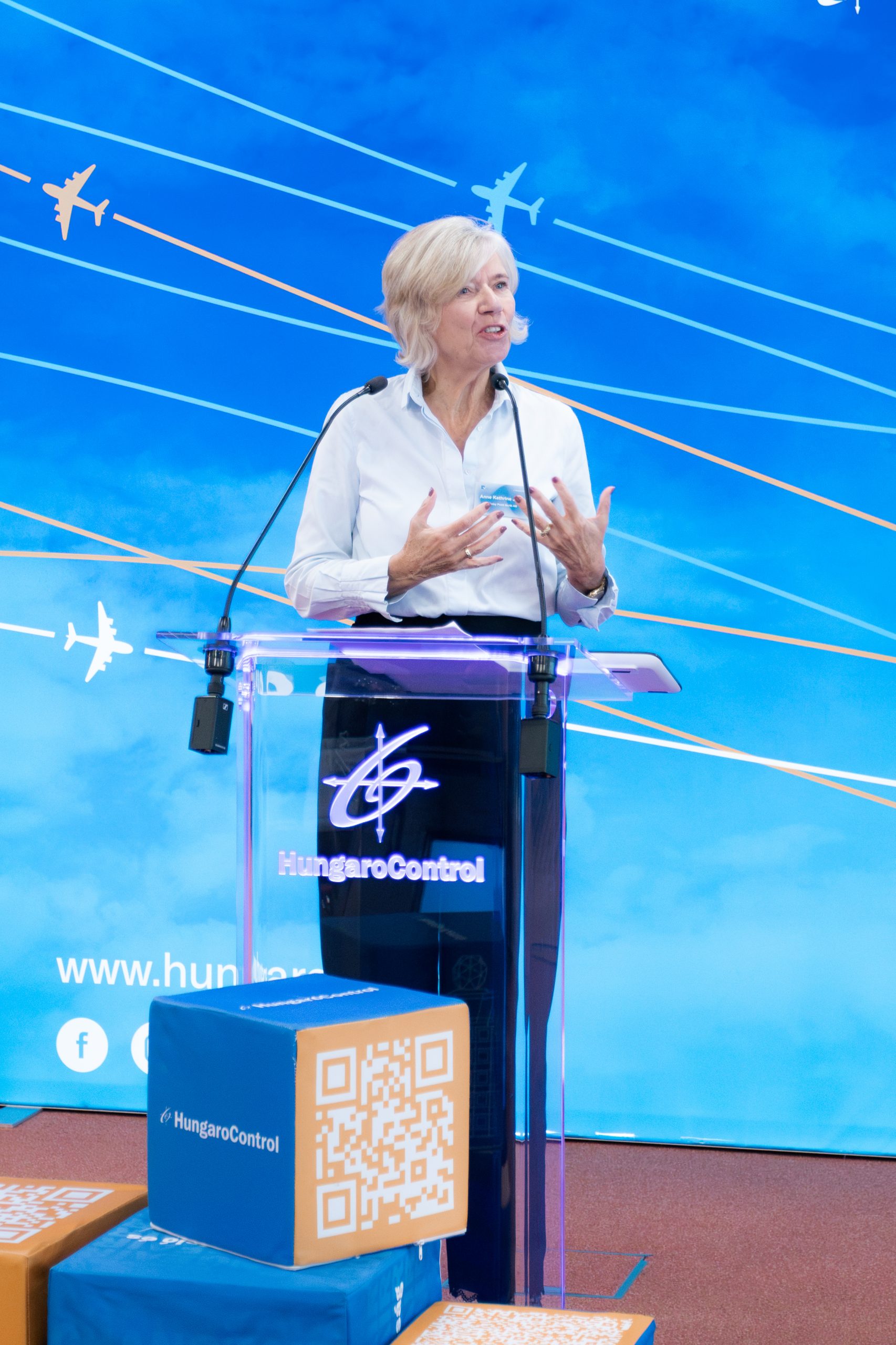
According to a recent study by Entry Point North, the parent company of HungaroControl’s training centre, resilience will be the most important characteristic of future air traffic controllers.
What does this mean for trainees? It means being able to cope with setbacks and remaining persistent, even if simulator exercises do not go well at the first, or even the tenth, attempt. It requires openness to instructor feedback and the ability to use it constructively. It also means being capable of performing under pressure and seeking assistance when necessary.
Researchers used online surveys and personal interviews to assess these skills among Generation Z trainees at Entry Point North, and their findings were striking. Compared with trainees from 10 to 15 years ago, today’s young participants generally demonstrate lower stress tolerance and greater uncertainty. They place a stronger emphasis on positive, and preferably immediate, feedback, while simultaneously demonstrating perfectionist tendencies and a lack of self-awareness. They are more sensitive, more emotionally driven, and require significantly more opportunities for individual practice than previous generations.
As a result, training centres and HR professionals must focus on more than merely transferring technical knowledge. Training systems and selection processes need to be adapted to the characteristics of newer generations, as preparing future air traffic controllers now requires different methods than it did even a decade ago.
The Solution: Competency-Based Training and Assessment
International regulation is also responding to labour shortages and increasingly diverse individual needs. The rigid, linear training structures of previous decades are gradually being replaced by competency-based training systems. From January 1, 2029, a new European Union regulation will make their implementation mandatory.
The new framework, CBTA (Competency-Based Training and Assessment), focuses on measuring the actual competencies and behaviours of air traffic controllers rather than simply tracking theoretical knowledge acquisition or training hours completed. In the future, trainees will need to demonstrate in practice the competencies required for safe operations, including decision-making, situational awareness, communication, workload management and problem-solving.
Currently, the international success rate is generally around 50%, meaning that only about half of trainees ultimately obtain their ATCO license. Experts believe competency-based training and assessment can significantly improve this figure by providing a more accurate understanding of which roles best match each trainee’s strengths and capabilities.
Instead of relying primarily on examinations that measure general knowledge, future training systems will place greater emphasis on targeted, competency-based assessments. This approach can improve licensing success rates, while also enabling individuals to thrive in roles that best match their abilities and talents.
Artificial intelligence may also play an important role in this transition, as digital learning platforms can help measure and evaluate trainee performance, competencies and behavioural patterns in an objective, data-driven manner.
